Rent or Medicine

by Serelora
This article was originally published on Medium.
Read full article on MediumWhen your insurer says no, who’s accountable if you die?
By Luis Cisneros, CEO | Serelora
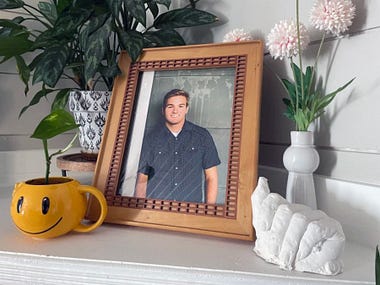
On January 10, 2024, Cole Schmidtknecht walked into a Walgreens in Appleton, Wisconsin to refill his inhaler. He was 22. He’d had asthma his entire life and managed it the same way for over a decade. A preventative inhaler called Advair Diskus, taken daily. It kept him breathing. It cost him about $66 a month.
That day, the pharmacist told him his medication was no longer covered. The new price was $539.19. No one had warned him. Not his insurance. Not the pharmacy. Not his doctor. Walgreens told him there were no cheaper alternatives, no generics available.
Cole couldn’t afford $539. He had rent to pay. So he left with only a rescue inhaler, the kind you use when an attack is already happening.
Five days later, he had a severe asthma attack. His roommate drove him to the emergency room. Two minutes before they arrived, Cole stopped responding. When the staff reached him, he was unconscious, pulseless, and blue. They tried to resuscitate him. He never woke up. His parents took him off life support on January 21.
He was 22 years old. He had insurance. He had a prescription from his doctor. He died because a pharmacy benefit manager called OptumRx, a subsidiary of UnitedHealth Group, had quietly removed his medication from the formulary. Because Walgreens didn’t offer him a workaround or contact his doctor. Because no one in the system was responsible for making sure Cole Schmidtknecht could actually get the medication that kept him alive.
His father, Bil, put it simply. Cole chose rent over his medicine.
The ERISA Wall
Cole’s family is suing OptumRx and Walgreens. They’re also pushing for legislation that would require insurance companies to give patients 90 days notice before changing a formulary. They want Cole’s death to mean something.
But here’s the question that haunts me. Can a family actually hold an insurance company accountable when a denial leads to death?
In the U.S., the answer is brutal. It depends what kind of plan the patient had.
If the coverage was employer-sponsored, it’s almost certainly governed by ERISA, the Employee Retirement Income Security Act of 1974. ERISA was written to protect pension plans. But courts have stretched it to cover health benefits in ways that now shield insurers from most state-law accountability.
When a denial leads to serious harm under an ERISA plan, families often find their wrongful death, negligence, and bad-faith claims “preempted.” Kicked out of state court. Forced into federal claims with limited remedies. The Supreme Court has reinforced this wall repeatedly.
The practical result is that the lawsuit becomes “pay the benefit you should have covered” rather than “pay damages for the death.” Families feel like there’s no accountability because, functionally, there isn’t.
Cole had insurance through his employer, Kriete Truck Center Green Bay. That likely means ERISA applies. OptumRx has already filed a motion to dismiss, arguing that federal law prohibits the case from being brought in state court. They expressed “deepest sympathies.” They also pointed out that Cole filled a $5 rescue inhaler that day, as if that were the same thing as the preventative medication he needed to stay alive.
Appeals Exist. They’re Not Enough.
The appeals process exists. Under the ACA, many plans must offer internal appeals followed by independent external review. In theory, this creates a path to overturn wrongful denials.
In practice, the process is too slow, too opaque, and too burdensome when the patient is standing at the pharmacy counter being told their medication costs eight times what it did last month. Cole didn’t have 30 days to file an exception. He had five days before he couldn’t breathe.
The Burden Is Backwards
Here’s what I keep coming back to. The burden of proof is backwards.
Right now, the insurer or PBM can deny first. The patient has to fight uphill through appeals. Coverage continues only if the patient knows which forms to file, whom to call, and how to escalate. Most people don’t. Most people are not health policy experts. Most people, when they’re told at the pharmacy that their medication costs $539, just leave.
What should happen is the opposite. If a doctor prescribes a medication, the default should be coverage. The insurer should only be able to deny after rapid physician-to-physician review. The burden should fall on the payer to prove the medication isn’t necessary, not on the patient to prove it is.
If a doctor is recommending it, it should be illegal for the insurance company to deny it without appealing to a board of physicians. Not the other way around.
That’s not how it works. But that’s how it should work.
The Economics of Denial
People pay premiums every month for one reason. So the plan shares the cost when the medication matters most.
But the economics of denial are simple. Saying no is profitable when the process is slow and causality is hard to trace. If a patient dies six months after a denial, good luck drawing a clear line from the coverage decision to the death certificate. The harm is diffuse. The accountability is untraceable. And the insurer keeps the premium.
Cole Schmidtknecht died five days after his denial. The causality is about as clear as it gets. And his family still has to fight through ERISA preemption arguments to have their case heard.
This is not conspiracy. It’s just how the incentives line up.
The Deeper Problem
The denial that killed Cole is a symptom of something deeper. Healthcare data is siloed and fragmented. A cardiologist doesn’t see what the endocrinologist saw. The PCP doesn’t know what happened in the ER last month. Nobody is connecting the dots across disciplines, which means nobody is catching the gaps in care until it’s too late. The interdisciplinary bridges that complex patients need to stay healthy simply don’t exist in most systems.
And here’s the thing. If people understood their risks better, they’d make better decisions. We saw this with smoking. We saw this with alcohol. When the data is clear and it’s communicated consistently, every time someone sees a doctor, behavior changes. Not for everyone. Some people will always fall through the cracks. But many will change course when they actually understand what’s at stake.
Nobody wants to die. That’s not a policy insight. It’s a human truth. And if the system made risk visible instead of hiding it inside claims data and formulary spreadsheets, more people would act on it.
A Different Architecture
Imagine a system that already knows whether a prescription is walking into a denial before the patient gets to the pharmacy counter. It checks the formulary, flags step-therapy requirements, identifies prior authorization traps. If there’s a problem, it surfaces a covered alternative or generates the documentation the payer will demand. At the moment of prescribing, not after the patient is stranded.
When a denial happens anyway, the system launches a rescue path immediately. Find the cheapest cash option. Surface discount programs and manufacturer assistance. Identify therapeutic equivalents. Give the patient something they can actually do, not a phone tree to navigate while they’re scared and short of breath.
And when a payer says no, the system makes that decision visible. Timestamps. Names. The clinical criteria used. A clear record of who overruled the prescribing physician and why. Because right now, denials happen in the dark. Nobody is watching. Nobody is keeping score.
If you make denial operationally harder than coverage, the economics change. If you give employers visibility into how their plans actually perform, they start asking different questions of their PBMs. If you create an auditable trail from prescription to outcome, causality stops being blurry.
That’s the system we need. That’s what I built. It’s called Nodesian, and now we’re scaling it.
Cole Schmidtknecht would be 24 now. His parents think about all the things he could have been doing.
He didn’t die because medicine failed him. He died because the system made it easier for a PBM to change a formulary in silence than for a 22-year-old to get the inhaler his doctor prescribed.
The system doesn’t need a nicer speech. It needs a different architecture. One where the patient isn’t the one holding the burden of proof while they’re trying to breathe.
Luis Cisneros is CEO of Nodesian, a healthcare AI company building data infrastructure for clinical and financial care coordination.
RELATED ARTICLES
Explore more insights and perspectives from our team.